How the Ugliest House Became One of the Most Valuable Homes on the Block

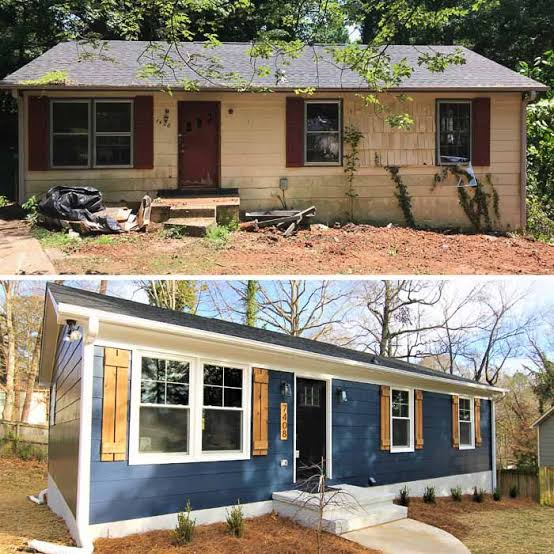
Some homes attract multiple offers as soon as they hit the market. Others sit for months until buyers stop paying attention.
Several years ago, I toured a property that almost no one wanted. The listing photos were poor, the front yard was badly overgrown, the garage door was damaged, and an uncooperative tenant made showings difficult. Nearly every other home on the street had been updated, while this one looked as though the neighborhood had moved on without it.
Most buyers reached the same conclusion: there were too many problems, and the property was not worth the effort.
One investor asked a different question:
“What would this house become if all the visible problems were fixed?”
Inside, the living room was filled with personal belongings, the curtains blocked most of the natural light, and the kitchen and flooring were badly dated. The backyard was neglected, and sections of the fence were leaning.
At first glance, the house looked like a complete mess. Once we mentally removed the clutter, worn flooring, dirty walls, and neglected landscaping, however, a very different property began to appear.
The lot was larger than most nearby properties. The floor plan was practical, all three bedrooms were usable, the garage could accommodate two vehicles, and the street was quiet. The house also offered convenient access to schools and major roads.
The appearance was poor, but the fundamentals were still strong.
After standing in the backyard for several minutes, the investor said something that captured the entire opportunity:
“Everything wrong with this house can be repaired. This lot and location cannot be reproduced.”
That distinction is one of the most important principles in real estate investing.
Separate Fixable Problems From Permanent Problems
The key question is not whether a property looks attractive today. It is whether the problems causing the discount can be solved.
Old flooring can be replaced. Walls can be painted. Landscaping can be restored. A damaged fence can be repaired. Even tenant-related issues can often be handled through the lease and the proper legal process.
Other problems are far more difficult to change. Highway noise, flood exposure, an awkward lot, a declining location, or weak rental demand can remain long after a renovation is complete.
The investor purchased the property because the market was heavily discounting temporary problems while overlooking permanent advantages.
He did not attempt a luxury renovation or turn the house into a social media showpiece. Instead, he focused on improvements that supported long-term rental and resale value. He installed durable flooring, repainted the interior, repaired the fence, cleaned up the landscaping, inspected the roof, HVAC system, plumbing, and electrical systems, and updated the areas most likely to affect tenant demand.
The finished house was not extraordinary. It was clean, practical, durable, and suitable for a family that wanted to stay for several years.
That was enough.
Tenants Often Value Function Over Fashion
The property found a tenant quickly after returning to the market.
The tenants were not concerned about whether the kitchen followed the latest design trend or whether the bathroom included luxury finishes. They cared about practical questions: Were the bedrooms large enough? Was the school commute manageable? Could the children use the backyard? Could the family live there comfortably for several years?
This is where many investors overspend. They renovate according to personal taste or online trends rather than the needs of the actual customer.
In most workforce and middle-income rental markets, tenants value cleanliness, safety, functionality, storage, location, and predictable maintenance more than expensive finishes.
A property does not need to be the most beautiful house in the neighborhood. It needs to meet the market better than competing alternatives at the same price.
The Best-Looking House Is Not Always the Best Investment
Over the following years, rents increased, the loan balance declined, and the neighborhood continued to improve. More families moved into the area, nearby homes were renovated, and local services and commercial development expanded.
Interestingly, the homes that had looked the most attractive when the investor purchased this property did not necessarily become the best investments.
Some buyers paid too much at the beginning. Others spent heavily on renovations that produced little additional rent or resale value. Some homes looked impressive but had smaller lots, inefficient floor plans, or weaker long-term fundamentals.
The neglected property performed differently. Its acquisition cost was lower, its lot was larger, its location remained stable, and the renovation had been controlled. Over time, it became one of the most valuable assets on the street.
It did not succeed because of an expensive transformation or unusual luck. It succeeded because the market had confused poor appearance with poor value.
The investor understood what could be changed and what could not.
Where others saw weeds, he saw land. Where others saw an old kitchen, he saw a manageable renovation. Where others saw a difficult tenant, he saw a temporary problem that had already been reflected in the price.
A Discount Is Only Valuable When You Understand Its Cause
This does not mean every distressed property is an opportunity.
Some homes are cheap because they contain serious structural, environmental, legal, or location-related risks. Buying what others avoid is not automatically contrarian or intelligent.
The real skill is understanding why buyers are walking away and estimating what that fear is worth.
Suppose a property is discounted by $100,000 because of flooring, paint, landscaping, and cosmetic repairs that can be completed for $30,000. That gap may represent an investment opportunity.
But when the discount is caused by flood risk, highway noise, weak demand, or a permanently inferior location, the low price may simply reflect the property’s true value.
Before buying a neglected home, ask three questions:
Can the problems be solved?
How much will it cost to solve them?
Will the market recognize the additional value after the work is completed?
The property in this story became one of the most valuable homes on the block not because it became perfect, but because one investor recognized its permanent strengths before the rest of the market did.
The ugliest house is not always the worst investment. Sometimes it is simply the property whose value is temporarily hidden behind problems that can be fixed.


Comments